
This website will soon end. Please update your bookmarks with the new website address

https://euraf.net/

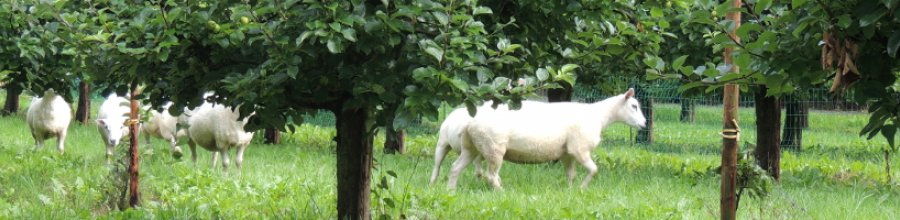
Combining organic livestock and bioenergy production - A novel trial integrating willow and alder short rotation coppice and cattle

Why combine livestock and energy production?

Agricultural land is subject to many competing demands: for increased food production to meet the needs of a growing world population; for bioenergy production from biomass crops such as short rotation coppice (SRC) to meet renewable energy targets; and the demand for agricultural land to protect the environment including soil, water and air quality, reducing climate change, and supporting biodiversity.

Undefined

Fodder trees for micronutrient supply in grass-based dairy systems - Multiple advantages for biodiversity and animal welfare

Why plant trees?

Currently, Dutch dairy farms usually feed their cattle with a combination of spring/summer grazing and imported maize silage and/or concentrates. Incorporating fodder trees in dairy farms can be a good alternative option to maize silage and concentrates, and for supplementing cows with macro and micro elements. In this leaflet, focus is placed on selenium, as it has been found to be lacking in the diet of grass-fed ruminants in the Netherlands.

English

Mulberry (Morus spp.) for livestock feeding - A useful source of protein

Why use mulberry to feed livestock?

Mulberry is used as a livestock fodder in many countries around the world (e.g. India and Japan). The leaves of the mulberry are known for its high protein content (15-28%), good amino acid profile (> 46%), high digestibility (>80%), high mineral content with ash values up to 25%, low fibre content (7.1-8.1%) and excellent palatability.

English

Lactating sows integrated with energy crops - Produce pork and tree biomass on the same area

Why introduce trees?

Trees, like poplar and willow, can provide pigs, managed in pasture-based systems, with a natural and stimulus rich environment. Sows and piglets can find shade in hot seasons and shelter in wet and windy weather. Further, the pigs can rub against the trees for skin care.

English

Silvopoultry: establishing a sward under the trees

Why do chickens need a sward under trees?

Trees in the outdoor run are beneficial to the welfare of chickens. The ancestors of domestic chickens roost in trees, and hens are happier and use more of the range when it is enriched with trees. However, one problem with including trees in the range is the lack of ground vegetation under the trees, due to reduced light levels and increased competition. Further, where the tree canopy opens unpalatable weeds, rather than grasses, may grow. 

English

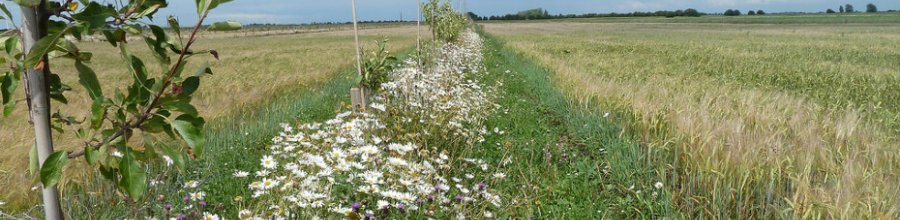
Weed suppression in alley cropping in Hungary - The benefits of mulching with herbaceous biomass

Why use mulch?

Mechanical weed management can be problematic because of eg. space availability and risk of tree damage. The costs of weed control per area is, therefore, higher than in large scale monocultures. Use of herbicides is not recommended, due to potential damage to the trees. Straw cover is a possible method of weed control, but its effectiveness depends on local circumstances (e.g. it is not effective in windy areas). Further, its removal is required during winter as it attracts rodents.

English

Agroforestry with standard fruit trees in Switzerland - Improving production and enhancing biodiversity

Why plant fruit trees?

There are various reasons why farmers in Switzerland have increasingly combined fruit trees with crops in recent years. One important motivation is to reduce soilverosion, and other benefits include thevreduction of nitrate leaching, and increased carbon sequestration and biodiversity.

English