
This website will soon end. Please update your bookmarks with the new website address

https://euraf.net/

Protecting trees in chestnut stands grazed with Celtic pigs Pigs - Avoiding damage to young and old trees

Why graze pigs in chestnut stands?

Before ink disease destroyed trees growing below 400 m above sea level, chestnut stands had been the most broadly distributed tree in Galicia (NW Spain). Currently, chestnut stands occupy over 60,000 ha in Galicia, mainly located in the eastern mountainous areas of Ancares-Caurel Natural Park, where close to 100 varieties are still growing and providing chestnut fruits. However, the orography with steep slopes renders the harvest of chestnut fruit unprofitable due to the high labour cost.

English

Grazing and biodiversity in Transylvanian wood-pastures

Grazing and biodiversity

Extensively managed wood-pastures are considered archetypes of traditional farming landscapes with high natural and cultural values in Europe. The livestock type used for grazing, as well as the structural features on the pastures, influences the biodiversity value of pastures. Scattered trees and shrubs were valued for their fruits, shade for livestock, beneficial effects on grassland and their beauty.

English

Protecting large old trees in wood-pastures - A keystone for biodiversity in Romanian wood pastures

The value of large old trees in pastures

Maintaining high biodiversity in production landscapes is a key conservation challenge. 

Large old trees are keystone structures, conferring high ecological value to pastures. The hollowing parts, the ageing bark and the dry stems, while being biological and ecological legacies, create a wide diversity of habitats for many organisms.


Undefined

Restoration of abandoned wood pasture - Renewing the past for the future

Why restore abandoned wood pastures?

Wood pastures with high nature and cultural value (HNCV) have been present in Hungary for thousands of years. Currently, there are 33,318 hectares of HNCV wood pasture in Hungary: 28% is in protected areas and 60% in EU Natura 2000.

English

Trees and the restoration of waterways in the Spreewald floodplain Maintaining the benefits of historical land use

Why restore ancient waterways?

In the past, flood-prone lowlands in Germany were adapted for agricultural land use through the installation of small waterways to improve drainage. The excess sediment from the waterways was used to develop raised areas. Planting trees on these elevated areas resulted in the development of a small-scale mosaic agroforestry system, rich in biodiversity.

English

Multi-functional hedgerows in the bocage systems of France

Why bocage agroforestry today?

In Brittany, the main period for creating the bocage landscape stretched from late 18th Century to early 20th Century. The hedgerows drew on the discontinuities of limits of ownership or use, while delivering fuel and timber wood for local and regional use. During the last 50 years, agricultural and broader rural changes have led to the deconstruction of the bocage and to the loss of ecological functions it provides.

English

Shade tolerant legumes - Improving the productivity of Mediterranean silvopastures

Silvopasture quality and productivity

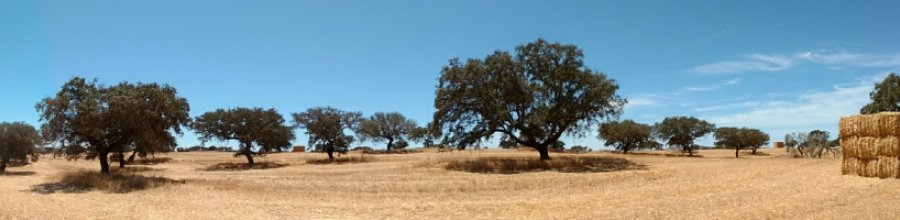
In silvopastoral systems, light interception affects productivity of flora beneath the canopy in various ways. In general, herbage production decreases with reduced light intensity. Thus, the use of shade tolerant cultivars of selected species can play an important role in successful silvopastoral management.

Due to their nitrogen fixing ability, the incorporation of shade tolerant legume species may have a special role in increasing the quality and productivity of silvopastures and in enhancing soil fertility.

English