Sharing knowledge | Improving practice | Enhancing livelihoods
|
|
|
Welcome to the 2nd AFINET newsletter!
This issue takes you on a tour of the recent activities of the nine regional agroforestry networks (RAINs), and several international events where the project has been presented in order to promote agroforestry practices and systems around Europe.
In this newsletter we also launch two new sections that will feature in all forthcoming newsletter of the AFINET project: the ‘technical articles’ and the ‘agroforestry in action’sections! They include information relevant for your daily agroforestry practices and examples of agroforestry farms. Get inspired!
We also invite you to have a look at our website and contact the innovation broker closer to your region. If you are still not a member of the RAIN in your country, contact your innovation broker and join the network.
|
|
 |
| AFINET - We need to make a change towards a Climate Smart Agriculture |
|
 Between May and September 2017 the first Regional Agroforestry Innovation Networks (RAINs) were organized in the nine different regions participating in the AFINET Project. Since the goal of this first meeting was to get a better insight in the main bottlenecks, knowledge gaps existing in practice, a good representation of practitioners was crucial. The main objective of these stakeholder consultations was to support agroforestry innovations and knowledge transfer, starting from bottlenecks and problems experienced by practitioners. Read more Between May and September 2017 the first Regional Agroforestry Innovation Networks (RAINs) were organized in the nine different regions participating in the AFINET Project. Since the goal of this first meeting was to get a better insight in the main bottlenecks, knowledge gaps existing in practice, a good representation of practitioners was crucial. The main objective of these stakeholder consultations was to support agroforestry innovations and knowledge transfer, starting from bottlenecks and problems experienced by practitioners. Read more
|
|

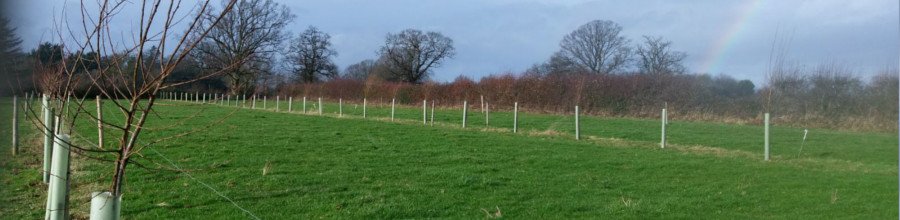
Depending on particular regional conditions, from mid-November to the end of March is the ideal planting season for trees. During these months, the trees can tolerate transfer as bare root trees from the nursery to the field. For most deciduous species, the earlier they are planted during the planting season (November to December), the better. Before you start planting, think about the design of your agroforestry system, the choice of tree species, the type of planting material (seedlings, standard trees, …), and the way of planting, etc.
Read more
|
|

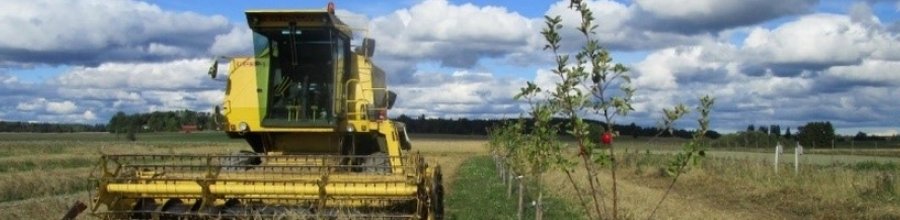
Planting trees into arable or vegetable fields means that land is taken out of annual production; depending on the design of the system, this could be up to 20% of the cropping area. There may be no return from the trees for many years after planting; this varies from approximately five years for fruiting species, or short rotation coppice systems to several decades for timber species. In many agroforestry systems, the area between the trees and under the tree canopy is an overlooked and under-utilised space, and unmanaged, this can create problems with weed control.
Read more |
|
|
In September, the Consortium Agroforestry Flanders organized an agroforestry excursion to the UK. Fifty Belgian and Dutch farmers, aspirant-farmers, students, advisors and researchers altogether visited five sites in the South-West of England. The first stop, which we highlight in this article, was the forest garden and nut tree plantation managed by the Agroforestry Research Trust. Read more
|
|
|
Galicia has 600 thousand hectares out of 3 Million hectares under the ownership traditionally called ‘Monte Veciñal en Man Comun’ (MVMC), that can be translated into English as ‘Neighbourhood owned Common Land’. The MVMC is a Germanic type of ownership in which the land is owned by the owners when they live on it and people lose the right of ownership when they leave. Most of MVMC are currently destined to be pure forest stands which present a high forest fire risk. Read more
|
|

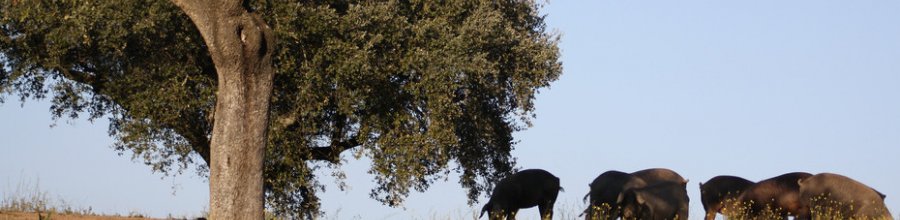
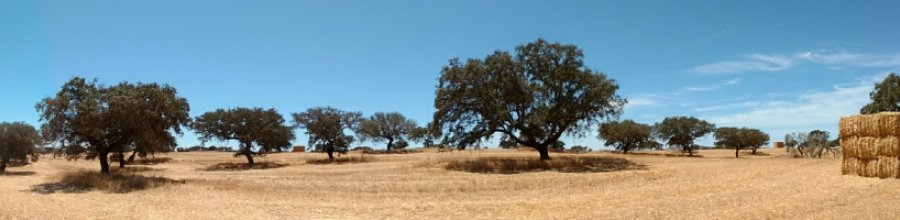
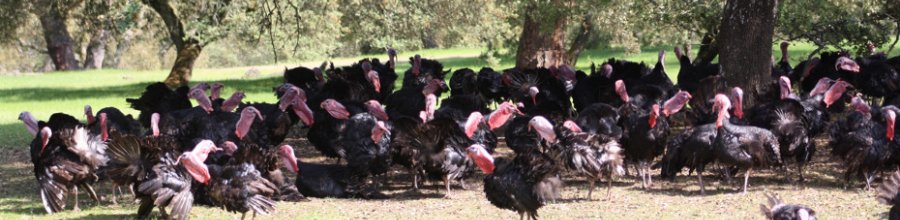
LIFE Montado-Adapt is a project co-financed by the European Union through the LIFE Program 2014-2020 which aims to promote climate change adaptation of the Montado/Dehesa agrosilvopastoral system in Portugal and Spain. The main objective of the project is to support managers and owners in the regions of Alentejo (Portugal), Extremadura and Andalucia (Spain) to implement integrated land use systems that will help them to adapt to current and future climatic conditions. Some of the strategies that will be implemented are to diversify crop production by choosing cultures and varieties that are more resistant to adverse climatic conditions but still profitable from an economic point of view, improve soil fertility (green manures, mycorrhization) and diversify, not only in terms of eco-products but also eco-services.
Read more about this in the LIFE Montado-Adapt website, or follow this project on facebook andtwitter. |
|

The project "Trees and forests in the mountain livestock systems: Innovating and measuring performances to support the evolution of Pyrenean grassland systems towards a better resilience to climate change" (AGROSYL 2016-2020) is based on the creation of an Operational Group "European Innovation Partnerships" bringing together farmers, agricultural and forestry development bodies, research and training institutions. The focus is on “Agroforestry and the expansion of forest in the Pyrenean Mountains – diversifying incomes and increasing resilience of livestock systems”. It aims to organize and follow a network of pilot farms/test plots promoting agrosilvopastoralism in Pyrenean grazing systems. The main goal is to support and develop the skills of pastoralists and their ability to use forest trees and agroforestry practices in their farming systems. The action plan includes the implementation of 6 experimental sites among volunteer farms and the organisation of awareness-raising events and training days. |
|
|
 Rosa Mosquera, Paul Burgess and Sonja Kay presented the main guidelines of the policy reportproduced by the AGFORWARD Project to over 30 policy officers of the European Commission. The report summarizes the definition of agroforestry, the five categories of agroforestry (silvopasture, silvoarable, hedgerows and riparian buffer strips, forest farming and homegardens), the importance of management plans to ensure direct payments, and the need of better coherence between Pillar II and Pillar I policies regarding agroforestry. For Pillar II, a unique measure involving all agroforestry categories is proposed for simplification, as well approaches considering agroforestry at farm and landscape levels and value chains for better commercialization. A strategy including policy innovation, education and research linked to agroforestry was also shown as a need. The report will be also presented at the 29th November 2017 in the European Parliament. Rosa Mosquera, Paul Burgess and Sonja Kay presented the main guidelines of the policy reportproduced by the AGFORWARD Project to over 30 policy officers of the European Commission. The report summarizes the definition of agroforestry, the five categories of agroforestry (silvopasture, silvoarable, hedgerows and riparian buffer strips, forest farming and homegardens), the importance of management plans to ensure direct payments, and the need of better coherence between Pillar II and Pillar I policies regarding agroforestry. For Pillar II, a unique measure involving all agroforestry categories is proposed for simplification, as well approaches considering agroforestry at farm and landscape levels and value chains for better commercialization. A strategy including policy innovation, education and research linked to agroforestry was also shown as a need. The report will be also presented at the 29th November 2017 in the European Parliament. |
|
AFINET activities & events
|
|
AFINET at the Agri Innovation Summit
AFINET was one of the projects selected to be presented at the  Agri Innovation Summitthat took place in Lisbon from 11th to 12th of November 2017. Project coordinator Rosa Mosquera presented the project, its goals and its distinct approaches, in particular the objectives and roles of the RAINs and of the innovation brokers. Joana Paulo from ISA was also present at this European event, attended by more than 400 participants! To see all the photos of the event, click here. For presentations and other materials produced as a results of the Agri innovation Summit, click here. Agri Innovation Summitthat took place in Lisbon from 11th to 12th of November 2017. Project coordinator Rosa Mosquera presented the project, its goals and its distinct approaches, in particular the objectives and roles of the RAINs and of the innovation brokers. Joana Paulo from ISA was also present at this European event, attended by more than 400 participants! To see all the photos of the event, click here. For presentations and other materials produced as a results of the Agri innovation Summit, click here.
AFINET at the WOODSCAPES Conference
 The international conference "Wooded rural landscapes in Central and Eastern Europe: biodiversity, cultural legacy and conservation", organized by University of Rzessów (Poland) and Centre for Ecological Research, Hungarian Academy of Sciences, was held in Rzeszów and Bükk National Park on 20th -25th September 2017. The event took place under the patronage of the Polish Ministry of Agriculture and Rural Development and the Ministry of the Environment. The special guest was Andrea Furlan, EC policy officer, who works on greening and direct payments (Pillar 1 of the CAP). EURAF and AFINET was represented by Robert Borek (AFINET partner from Poland), who discussed agroforestry in terms of the regional situation in Poland, focusing on extensive silvopastoral practices. The aim of the meeting was to identify major challenges in wooded rural landscapes in this part of Europe; we focused specifically on wooded pastures in the Carpathian region. Amongst other things, the event provided the opportunity to discuss about the land economy and policies existing there in terms of agriculture, forestry, nature conservation, tourism and spatial planning processes. During the event, AFINET and SustainFARM projects were presented. The international conference "Wooded rural landscapes in Central and Eastern Europe: biodiversity, cultural legacy and conservation", organized by University of Rzessów (Poland) and Centre for Ecological Research, Hungarian Academy of Sciences, was held in Rzeszów and Bükk National Park on 20th -25th September 2017. The event took place under the patronage of the Polish Ministry of Agriculture and Rural Development and the Ministry of the Environment. The special guest was Andrea Furlan, EC policy officer, who works on greening and direct payments (Pillar 1 of the CAP). EURAF and AFINET was represented by Robert Borek (AFINET partner from Poland), who discussed agroforestry in terms of the regional situation in Poland, focusing on extensive silvopastoral practices. The aim of the meeting was to identify major challenges in wooded rural landscapes in this part of Europe; we focused specifically on wooded pastures in the Carpathian region. Amongst other things, the event provided the opportunity to discuss about the land economy and policies existing there in terms of agriculture, forestry, nature conservation, tourism and spatial planning processes. During the event, AFINET and SustainFARM projects were presented.
Workshop on ‘The role of agroforestry practices in the prevention and post fire recovery in montado ecosystems’
In August 2017 one large fire affected 2355 ha of the Grândola district in Portugal, where some members of the Portuguese AFINET RAIN are based. The fire affected 1553 ha ofmontado and natural pastures, the most important silvopastoral system in the region. In the RA IN meeting that took place on 12th September, one of the knowledge gaps identified referred to the post-fire management practices for the restoration of these areas after such an extreme event. The AFINET project, together with the ANSUB farmers association and sponsored by the Grândola Municipality, has organized a workshop dedicated to this topic, that had the attendance of 30 participants. Researchers from CEF andCEABN with documented expertise on this subject spoke in the morning presentations. In the afternoon participants made a visit to the area affected by the fire, in order to locally access different situations and discuss alternative measures that minimize the impact of this event and ensures the protection and the regeneration of this montado área. IN meeting that took place on 12th September, one of the knowledge gaps identified referred to the post-fire management practices for the restoration of these areas after such an extreme event. The AFINET project, together with the ANSUB farmers association and sponsored by the Grândola Municipality, has organized a workshop dedicated to this topic, that had the attendance of 30 participants. Researchers from CEF andCEABN with documented expertise on this subject spoke in the morning presentations. In the afternoon participants made a visit to the area affected by the fire, in order to locally access different situations and discuss alternative measures that minimize the impact of this event and ensures the protection and the regeneration of this montado área.
The 15th North American Agroforestry Conference
AFINET was also presented at the 15th North American Agroforestry Conference,organized by John Munsell and Gregory Ormsby Mory from the Association for Temperate Agroforestry (AFTA), on the 29th June 2017 in Blacksburg, Virginia (USA). The conference provided information on the recent advances in agroforestry in North-America including Canadá and Mexico. A final round table took place, involving representatives from Canada (Dr. Henry de Gooijer), México (Dr. Ana Isabel Moreno Calles), USA (Dr. Susan Stein) and Europe (Dr. Rosa Mosquera-Losada). The presentations were followed by a lively discussion on how to improve policy measures all around the world. The conference was broadcast by streaming to allow anyone to participate. Main concerns regarding policy were related to the difficulties to identify agroforestry as such and the lack of farmer’s and advisor’s knowledge about how to implement agroforestry. The need of a strong effort for the development of innovation and research was also highlighted during the conference.
AFINET 3rd partners meeting
 The third partners meeting of the AFINET project took place at Instituto Superior de Agronomia in Lisbon, between the 6th and 7th of December 2017. The meeting allowed partners to discuss progress of the different tasks of the project, and jointly plan the second RAIN meetings to take place at the beginning of 2018. The meeting also included field visits to silvopastoral agroforestry farms, managed by members of the Portuguese RAIN, located in the Coruche and Chamusca regions. These visits were a unique opportunity for the project partners, in particular the Innovation brokers, to get in loco feedback on farmer’s ideas, experiences and challenges, while dealing with management of these systems. On the other hand, farmers experienced a unique day where they were able to discuss possible solutions and innovations with researchers and technicians experienced in different environmental and social conditions, therefore capitalizing on their collaboration with the AFINET Project. The third partners meeting of the AFINET project took place at Instituto Superior de Agronomia in Lisbon, between the 6th and 7th of December 2017. The meeting allowed partners to discuss progress of the different tasks of the project, and jointly plan the second RAIN meetings to take place at the beginning of 2018. The meeting also included field visits to silvopastoral agroforestry farms, managed by members of the Portuguese RAIN, located in the Coruche and Chamusca regions. These visits were a unique opportunity for the project partners, in particular the Innovation brokers, to get in loco feedback on farmer’s ideas, experiences and challenges, while dealing with management of these systems. On the other hand, farmers experienced a unique day where they were able to discuss possible solutions and innovations with researchers and technicians experienced in different environmental and social conditions, therefore capitalizing on their collaboration with the AFINET Project.
|
|
2nd European Symposium on Pollarding
The 2nd European Symposium on Pollarding, that will take place on 1st to 3rd March 2018, Basque Country, France, promises to be an exciting three-day event where participants will explore the diversity of pollarding practices and their implementation. This symposium will host many experienced and knowledgeable pollarding practitioners, providing visitors with opportunities to network, share and exchange useful ideas and insights.
The programme includes conferences, round-table discussions, workshops and field visits, including demonstrations of pruning techniques and processing machines. As a flagship event on the Agroforestry agenda in 2018, the '2nd European Symposium on Pollarding' is a must for those interested in helping to improve sustainable and productive farming landscapes. The event is co-organised by the French Agroforestry Association (AFAF)and 6 other partner organisations, from local farmers' associations to international institutions, including the European Agroforestry Federation, the Organic Research Centre and the World Agroforesty Centre. Registration will open mid-December.

4th European Agroforestry Conference
The 4th European Agroforestry Conference will take place in Nijmegen, The Netherlands, between 28th and 30th May 2018, while the city is hosting the ‘European Green Capital 2018’. The Conference, dedicated to the topic ‘Agroforestry as sustainable land use’, will focus on ways to achieve effective agroforestry implementation at the farm level, and how to realize the transition to an agricultural sector that uses the economic and environmental benefits that agroforestry offers.
The ambition of the EURAF Conference 2018 is therefore to accelerate and inspire the transition towards agroforestry as a sustainable land use, including the role that agroforestry has to play in the fight against climate change. towards agroforestry as a sustainable land use, including the role that agroforestry has to play in the fight against climate change.
Farmers, researchers, and policy makers are expected to attend the conference. RAIN members of the AFINET project will be informed about this international event, and invited to participate in a session organized by the project. Farmers are invited to exchange their experiences and know-how, including barriers in their transition from traditional farms to farms applying agroforestry practices. Abstracts must be submitted before 15th December 2017. More info here.
|
|
|
|
|
View this newsletter in mailchimp
|



 Agroforestry Research Trust forest garden and nut tree plantation